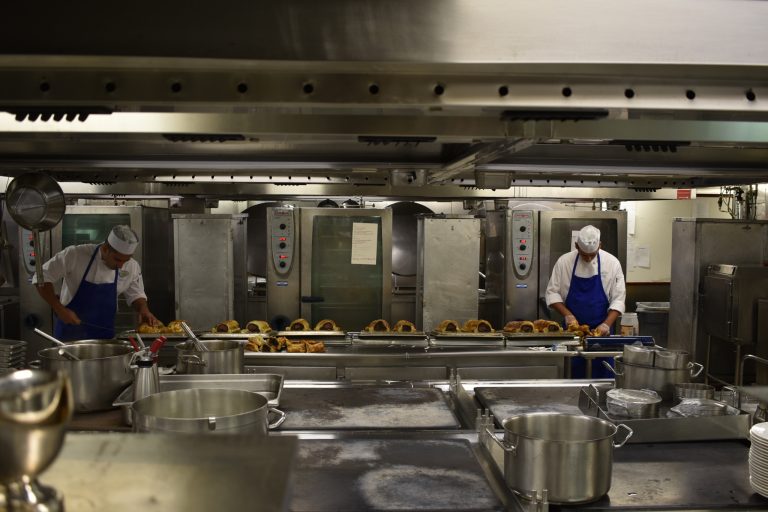
A staff meal is the food a restaurant cooks for its own employees, usually once per shift, and eaten together before doors open or after the last tables leave. In many kitchens it goes by another name: family meal. It is rarely fancy. Think a big tray of roast chicken, rice and salad, a pot of soup or tacos built from whatever the kitchen has on hand. For the people who work there, though, the staff meal is one of the few moments in a long day when everyone sits, or at least stands, in the same place and eats.
Key takeaways
- The staff meal, or family meal, is a shared meal the restaurant cooks for its own team, typically before or after service.
- A cook or chef takes a turn making it, often using product that would otherwise go unused.
- Timing depends on the operation: some eat before dinner service, others after the dining room winds down.
- Federal law does not require meal breaks, but some states do, and tax rules treat on-site meals for food service staff in a specific way.
What the staff meal is and why restaurants keep it
Restaurant work is physical, fast and long. The Bureau of Labor Statistics notes that cooks often stand for long periods and work under pressure, and that schedules include early mornings, late evenings, weekends and holidays. People in that rhythm can easily go a whole shift without eating properly. A staff meal solves a practical problem first: it puts food in front of the team at a predictable time.
It also does something less tangible. A Milwaukee Magazine feature on how a daily communal meal brings restaurant staff together describes it as a long-standing tradition in which staff bond and talk through the shift, and quotes operators who say people work better when they have been fed. Front of house and back of house often spend the whole night on opposite sides of the pass. Sitting down together, even for twenty minutes, is one of the few times they meet as one team.
If you are new to how those two sides are organized, our guide to front of house roles explains who does what in the dining room, and the piece on the kitchen brigade system covers the kitchen side.
Who cooks it and what gets served
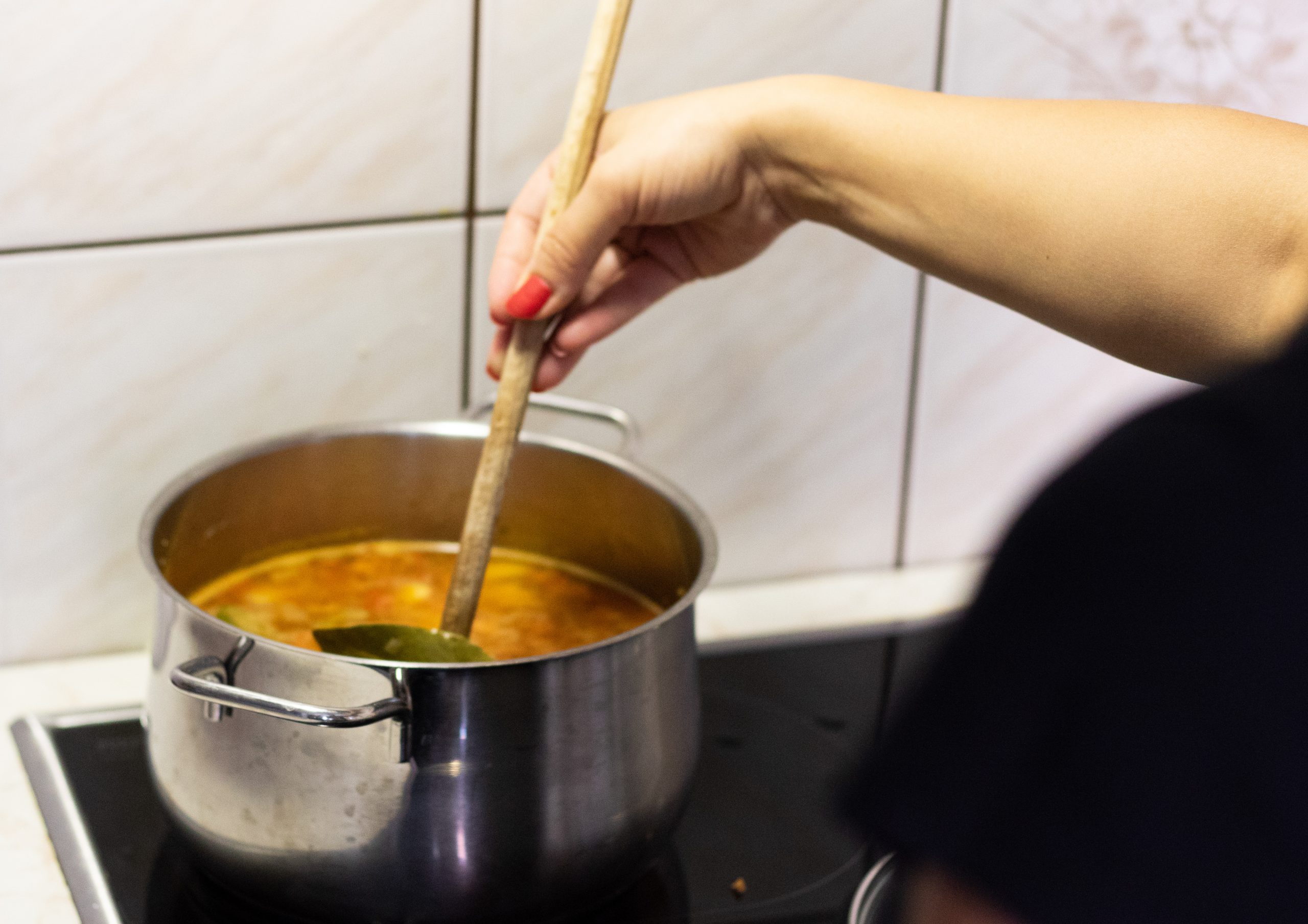
There is no single rule, but the usual pattern is that a cook or chef takes responsibility for family meal on a given day, fitting it around their regular prep. Because those cooks are busy with the restaurant’s own food, the meal tends to be simple and filling: sandwiches, salads, roasted potatoes, a tray of chicken, a pasta, rice and beans.
Staff meal is also where a kitchen uses product sensibly. The same Milwaukee Magazine article describes extra product from dishes that came off the menu, such as dips, sauces and pickles, being set aside on a dedicated shelf for the family meal. In practice that can mean trim from butchery going into a stew, or a surplus of one vegetable becoming the base of a soup.
For junior cooks, it can be a quiet test. Cooking for twenty or thirty colleagues on a deadline, from mismatched ingredients, shows a chef how someone plans, seasons and manages time. Some cooks use it to practice a technique or try a dish from their own background.

When it happens during the shift
Timing varies with the type of restaurant and the shift pattern.
| Timing | How it usually works | Trade-offs |
|---|---|---|
| Before service | The team eats together after prep and before the pre-shift meeting | Everyone starts fed, but it competes with last-minute prep |
| After service | Staff eat once the dining room has cleared | No pressure from the clock, but some people leave first |
| Split | Kitchen and dining room eat at different times | Fits staggered start times, but loses the shared moment |
| Grab-and-go | Food is left out and people eat when they can | Flexible during busy periods, but rarely feels like a meal |
The Milwaukee Magazine piece gives examples of both main patterns: one restaurant eating shortly before dinner service, another eating after service because the team had no time beforehand for menu finalizing, pre-shift meetings and late-arriving front of house staff.
How the rules on breaks and meals apply
Two separate sets of rules touch on staff meals in the United States, and neither tells a restaurant what to cook.
The first is about time. The Department of Labor says federal law does not require lunch or coffee breaks. Where an employer offers short breaks, usually about 5 to 20 minutes, federal law counts them as paid work time. Bona fide meal periods, typically 30 minutes or more, are not work time. Some states set their own meal and rest break requirements, so the answer depends on where the restaurant is. If you work in a restaurant and are unsure how your meal time is treated, your state labor department is the place to ask.
The second is about tax. IRS Publication 15-B on employer-provided fringe benefits says meals an employer furnishes to a restaurant or other food service employee during, or immediately before or after, the employee’s working hours are treated as furnished for the employer’s convenience. Its own example is waitstaff who work the breakfast and lunch periods; the value of the breakfast and lunch furnished in the restaurant on the days they work can be excluded from their wages. The same publication notes that the rules on what an employer can deduct for such meals changed for amounts paid after 2025, which is a matter for the restaurant’s accountant rather than the cook making the soup.
Food safety still applies
Family meal is still food from a commercial kitchen, so the same handling habits apply. Cooks keep raw and ready-to-eat items apart, cool leftovers properly and do not serve anything they would not put in front of a guest. Many kitchens also set a place away from the prep line where staff eat, so personal plates and drinks stay out of food areas.
Frequently asked questions
Is the staff meal free?
Practices differ between employers. Many restaurants provide it as a matter of course, but policies on meals, breaks and any related deductions vary by employer and by state law, so check your own workplace’s written policy or ask your manager.
Do front of house staff eat the staff meal too?
Usually, yes. The tradition is meant for the whole team, servers, hosts, bartenders and bussers as well as cooks and dishwashers. In practice, staggered start times mean some people eat earlier or later than others.
Can you skip it?
Generally yes; nobody is made to eat. It is still worth turning up when you can, because it is often where the team shares news, specials and the plan for the night.
Bringing the habit home
If you work shifts, the idea behind family meal is worth keeping outside work too: a set time to eat a real meal rather than grazing on whatever is nearby. Our piece on shift work and sleep covers more ways restaurant workers protect their routines. For more on the lives and habits of people who work in restaurants, browse our Lifestyle articles.