To become a bartender in the US you usually need no degree: you need to meet your state’s minimum age, complete any responsible-alcohol-service training your state or employer requires, and get hired somewhere that will train you, often after starting as a barback or server. Most bartenders learn the job on the job over a few weeks. Bartending school is optional, and experience on a busy floor tends to count for more with hiring managers.
Key facts
- Median bartender pay was $34,340 a year ($16.51 an hour) in May 2025, tips included, according to the Bureau of Labor Statistics.
- There were about 762,600 bartender jobs in 2025, with about 121,200 openings projected each year through 2035.
- Most states require bartenders who serve alcohol to be at least 18; some set the age higher.
- Many states and localities require a responsible-server course; California’s must be completed within 60 days of hire.
- There is no single national “bartender license”; requirements are set state by state and sometimes city by city.
What does it take to become a bartender?
The Bureau of Labor Statistics’ Occupational Outlook Handbook entry for bartenders sums up the entry route: typically no formal education is required, though some employers prefer a high school diploma, and most bartenders learn over a few weeks on the job, covering drink recipes, bar setup and customer service. Some people take a bartending school or community college course first.
In practice, the requirements fall into three groups: the legal ones your state sets, the training your employer expects, and the skills that get you hired and keep you on busy shifts.
How old do you have to be to bartend?
The BLS says most states require bartenders who serve alcohol to be at least 18. Some states set 21 for mixing and pouring drinks behind a bar, even where 18-year-olds can carry drinks to tables as servers. Your state alcohol control agency publishes the exact rule, and it is the first thing to check before you apply.
Do you need a bartender license?
There is no federal bartending license. What people usually mean by a “bartender license” is one of two things. The first is a state or local server permit or certificate, which some places require before you can sell alcohol. The second, and more common, is a responsible-beverage-service course that teaches how to check IDs, recognize intoxication and refuse service, which the BLS notes many states and localities require.
California shows what a state program looks like. Under its Responsible Beverage Service program, in force since July 1, 2022, anyone who checks IDs, takes drink orders, pours or delivers alcohol at a licensed on-premises business must register, complete training and pass an exam within 60 days of their first day of work. The exam has 50 multiple-choice questions with a 70% pass mark, and certification lasts three years. Other states run their own versions, and many employers ask for a recognized course even where the law does not.
If your bar also prepares food, you may need a food handler card as well. Requirements vary by state; our guide to how the FDA Food Code becomes local rules explains why.
Is bartending school worth it?
It can help you learn recipes, pour counts and tools before your first shift, and some schools help with job placement. But it is optional, and it does not replace experience. Many bar managers would rather hire someone who has worked a busy Friday as a barback or server than someone with a certificate and no floor time. If you do pay for a course, check what it costs, whether it includes a state-approved responsible-service certificate, and whether local bars actually recognize it.
How do most bartenders get their first job?
- Start nearby. Barbacks stock ice, glassware and garnishes, change kegs and keep the bar clean. It is the most common way in, because you learn the bar’s layout and pace while you work.
- Or start on the floor. Servers who know the menu, the regulars and the point-of-sale system are often first in line when a bar shift opens up.
- Get your certificates early. Arriving with responsible-service training already done makes you easier to schedule.
- Learn the classics. Know a core list of standard cocktails, the main spirit categories and how to pour accurately before you ask for a trial shift.
- Interview like a host. Bar managers hire for calm, speed and friendliness. Our restaurant job interview checklist covers what to bring and what you will be asked.
Some employers also offer formal apprenticeships that combine paid work with structured training; our guide to restaurant apprenticeships explains how to find and judge one.
What skills matter most behind the bar?
- Speed with accuracy: building several drinks at once without losing count of pours or tabs.
- Judgment: checking IDs every time and knowing when to slow down or stop serving someone.
- Cash and systems: running tabs, splitting checks and closing out a register at the end of a shift.
- Hospitality: remembering faces and orders, reading the room and keeping conversation light while working.
- Stamina: the BLS notes bartenders often work late evenings, weekends and holidays, and part-time schedules are common.
How the bartender’s role differs from a sommelier’s or a barista’s is covered in our comparison of beverage roles.
How much do bartenders make?
The BLS puts median bartender pay at $34,340 a year, or $16.51 an hour, in May 2025, and notes that the figure includes tips. Half of bartenders earn more and half less. Real earnings swing widely with the venue, the shift and the city: a weekend night at a busy cocktail bar and a weekday lunch at a quiet hotel bar are very different jobs. The BLS projects employment to grow 5% from 2025 to 2035, faster than average, with most openings coming from people leaving the job.
Frequently asked questions
How long does it take to become a bartender?
Training on the job usually takes a few weeks, according to the BLS. Getting the first bar shift can take longer, because many bartenders spend months as a barback or server first.
Can you bartend without experience?
Some bars hire beginners, especially high-volume venues that train their own staff. Barbacking is the most reliable way to get experience quickly.
Is a responsible-service certificate valid in every state?
No. Each state decides which courses it accepts. California, for example, requires its own state-approved program. Check your state alcohol agency before you pay for a course.
Do bartenders need to know hundreds of cocktails?
No. Most bars run on a house menu plus a core set of classics. Know those well, and learn the bar’s own recipes during training.
What is a barback?
A barback supports the bartenders: restocking ice, glassware, garnishes and bottles, changing kegs and keeping the bar clean. It is the usual entry job behind the bar.
The short version
Check your state’s age rule, get responsible-service training, start as a barback or server, and learn the classics. Experience opens more doors than any certificate. For other routes into the industry, see our guide to hospitality careers beyond the kitchen or browse more Restaurant Careers guides.
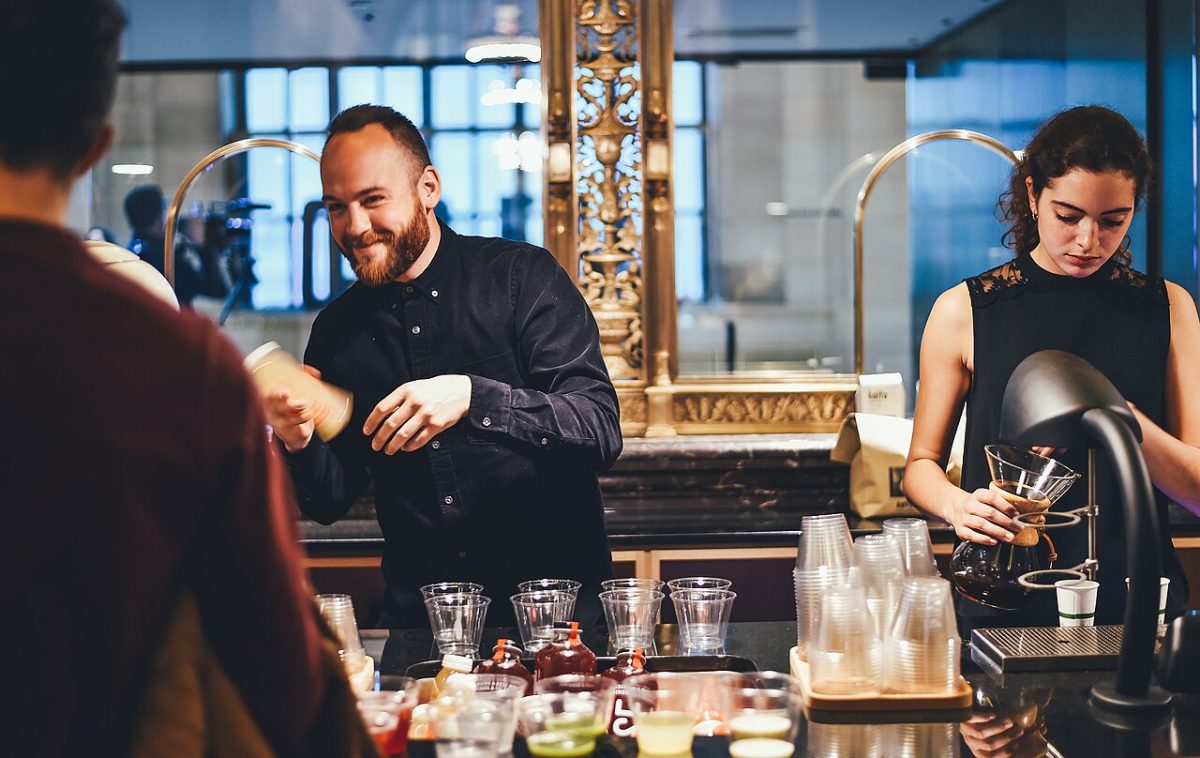
Featured photo: Bartenders serving cocktail by Crew, CC0.