The FDA Food Code is a model set of food safety rules for restaurants, grocery stores and institutions such as nursing homes. The U.S. Food and Drug Administration publishes it, but it is not federal law on its own. States, localities, tribes and territories choose whether and how to adopt it, and their versions are what health inspectors enforce. So the rules behind a restaurant inspection travel a long road: from a proposed change, through a national conference, to an FDA edition, into state rules and finally onto the kitchen floor. Here is that road, one step at a time.
Key takeaways
- The FDA Food Code is a model code; it becomes enforceable only when a state, local, tribal or territorial agency adopts it.
- Proposed changes are debated at the Conference for Food Protection, where state regulators vote on recommendations to the FDA.
- Full editions follow a four-year interval, with supplements in between.
- Adoption is uneven, so the version enforced in one state may differ from the next.
Step 1: Someone proposes a change
Say a regulator, an industry food safety manager, an academic or a consumer group believes a rule should change. Perhaps a new cooling method has evidence behind it, or a definition no longer fits how businesses operate.
They do not write to the FDA directly to rewrite the code. Instead, they submit an “Issue” to the Conference for Food Protection (CFP). The CFP describes itself as a forum that brings together representatives from the food industry, government, academia and consumer organizations. It has no formal regulatory authority, but it profoundly influences model laws and regulations. Issues must be submitted on approved forms and within set time frames.
Step 2: A council debates it
Each Issue goes to one of three CFP councils. Council I deals with the impact of food-related laws and regulations, Council II with administrative, education and certification guidelines, and Council III with the science and technology of food safety. Committees may study an Issue and report back. The council then recommends an action.
The conference meets every two years, so this debate happens at a biennial meeting rather than continuously.
Step 3: State delegates vote
Council recommendations go to the Assembly of State Delegates. A delegate is a meeting registrant who represents a state, territory or District of Columbia food regulatory agency. The Assembly votes on what the councils recommend.
According to the National Association of County and City Health Officials, approved recommendations, which often propose changes to the Food Code and its annexes, are sent to the FDA in a letter from the conference chair within 45 days of the meeting, and the FDA is expected to respond in writing within 60 days.
Step 4: The FDA publishes a new FDA Food Code edition
The FDA’s Food Code page explains that editions came out every two years from 1993 to 2001. With the support of the CFP, the FDA then moved to a four-year interval between full editions, starting with the 2005 Food Code, and may publish a supplement in between to update or clarify provisions.
At the time of writing, the most recent full edition was the 2022 Food Code, which the FDA calls the 10th edition. Among the items it highlights is the addition of sesame as a major food allergen, which followed federal labeling law naming sesame the ninth major allergen.

Step 5: Each state decides what to adopt
This is the step most people never see. The FDA says restaurant and retail food oversight in the United States is typically handled at the state and local level, and it encourages uniform, complete adoption of the newest edition. Adoption still varies. In its 2024 adoption report, the FDA counted:
| Food Code versions adopted (as of 2024) | State agencies | States | Share of U.S. population |
|---|---|---|---|
| The 2022 edition | 11 | 7 | 16.06% |
| The 2022 or 2017 edition | 30 | 24 | 51.92% |
| The 2022, 2017 or 2013 edition | 46 | 36 | 64.64% |
The report also tracks the areas where state agencies are less stringent than the model. In other words, the code a restaurant follows depends heavily on where it is.
Step 6: Inspectors enforce it in the kitchen
Once a state or local agency adopts its version, health inspectors use it as the basis for routine inspections, and the results feed into the scoring systems we covered in our explainer on restaurant inspection grades.
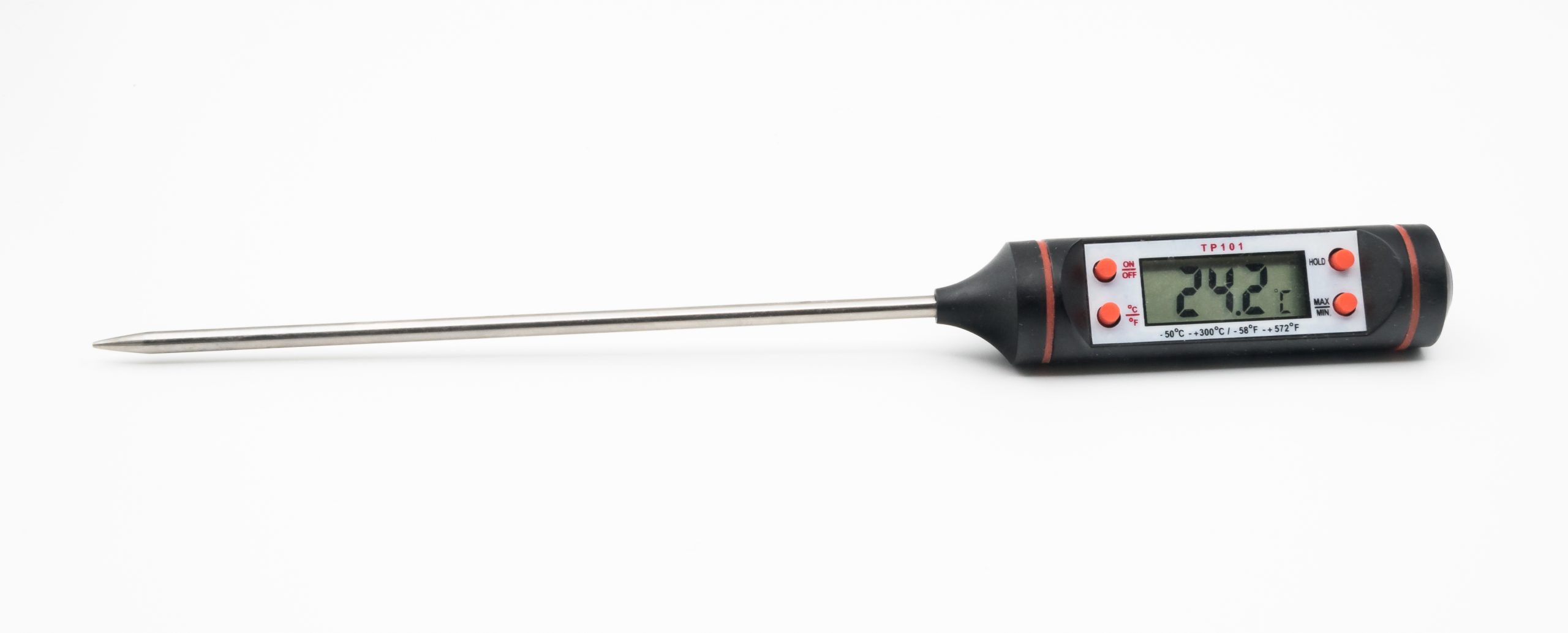
What does that look like on a busy line? Training material from New Mexico State University, based on an earlier Food Code edition, sets out core temperature rules: potentially hazardous food held cold at 41°F or colder and held hot at 135°F or hotter. Those numbers shape how cooks organize their stations, a habit described in our guide to mise en place. Handwashing sinks, labeled containers and cold drawers are not house style; they are how a kitchen meets the code its inspector carries.
Frequently asked questions
Is the FDA Food Code federal law?
No. It is a model the FDA offers for adoption by local, state, tribal and federal jurisdictions. It becomes enforceable where an agency adopts it into its own law or regulations.
Does every state use the same version?
No. The FDA’s 2024 report shows states spread across several editions, and some state agencies are less stringent than the model in particular areas. Your state or local health department publishes the code it enforces.
Who can propose changes to the Food Code?
Through the Conference for Food Protection, Issues can be submitted by interested persons, including regulators, industry members, academics and consumer representatives, on the conference’s approved forms and deadlines.
Find the code your local restaurants follow
If you want to know the actual rules in your area, start with your state or county health department’s website and look for its food code or retail food regulations; the FDA also keeps a list of state codes by state. For more on how menus and standards are set, browse our Menus & Standards articles.