Restaurant kitchen lingo exists because a busy line has no time for full sentences. A handful of short words tell cooks what to start cooking, how many of an item are needed, what has run out and where someone is walking with a hot pan. If you are about to start your first kitchen or dining room job, or you are simply curious about what you hear through the pass, the words worth learning first are the safety calls, then the order calls, then the planning terms. This guide sorts them by how much they matter.
Key takeaways
- Learn the safety calls first: corner and behind protect you and everyone near you.
- Order calls such as fire, all day and hands keep food moving on time.
- 86 means an item has run out, and it dates back at least to 1942.
- Mise en place is a French term for having everything prepared and in place.
- Every kitchen has its own house words, so listen before you copy.
How to judge which kitchen words matter
Think of kitchen vocabulary the way you would think about buying tools: start with what you will use every shift and what keeps you safe, and add the specialist items later. Three questions help you sort any new term.
- Does it protect someone? Movement calls stop collisions with hot pans, sharp knives and heavy trays. These come first.
- Does it change what you cook or carry? Order calls tell you to start, stop, count or deliver. Missing one slows the whole line.
- Is it about planning rather than the rush? Prep and setup terms matter before service and at the end of the night.
Kitchens that run on a strict hierarchy, as described in our guide to the kitchen brigade, tend to use these calls very consistently, because every station depends on hearing them.
Safety calls: learn these on day one
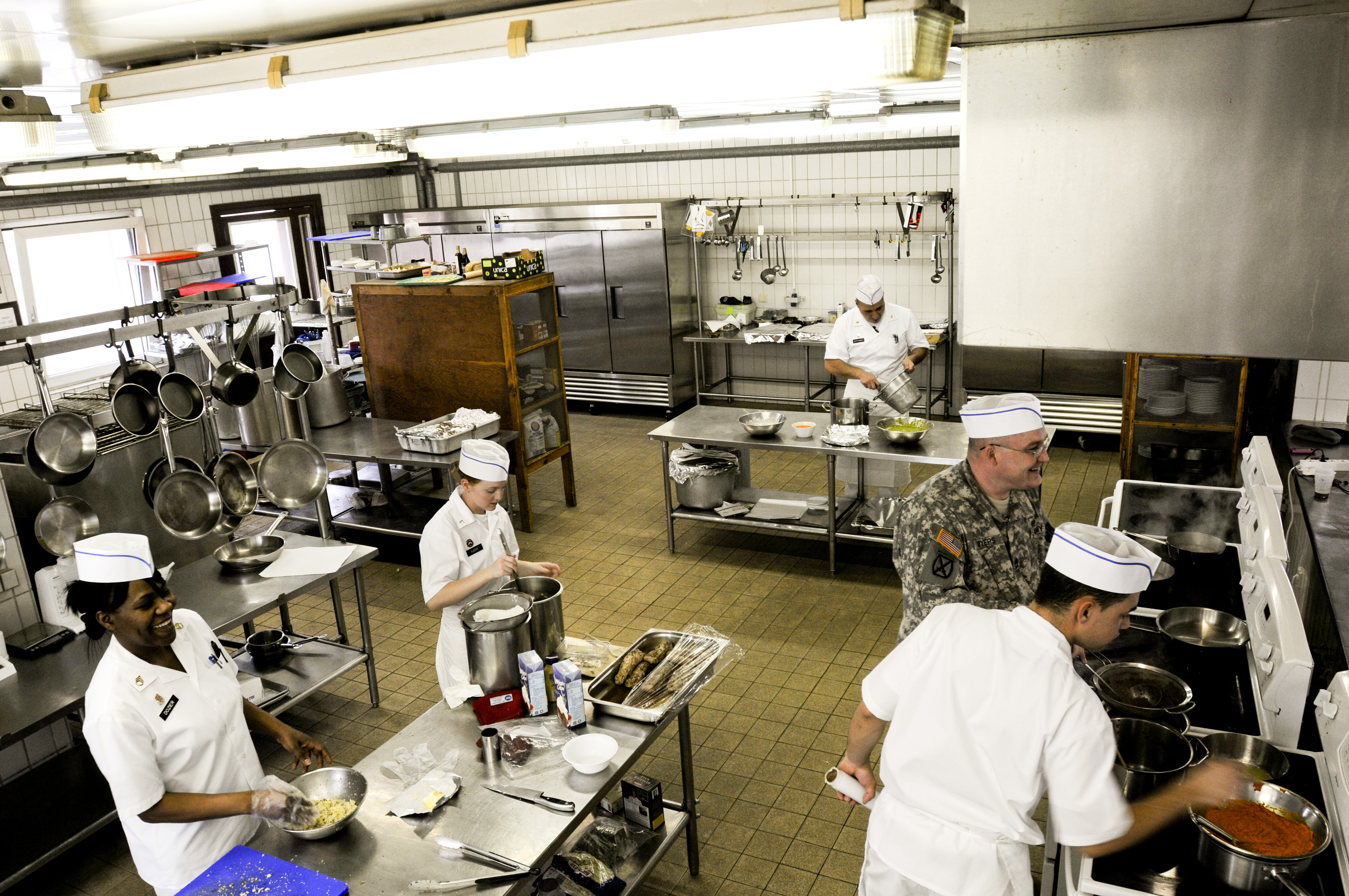
Movement calls are courtesies and safety tools at the same time. A feature on kitchen lingo in TABLE Magazine describes how servers and hosts use “corner” and “behind” to alert staff that they are coming around a corner or passing behind them.
- Corner. Said as you approach a blind corner, so nobody steps out into you.
- Behind. Said as you pass behind someone working at a station. Many kitchens add the hazard, such as “hot behind” or “sharp behind”, so the person knows not to step back.
- Walking. Servers use it to tell the kitchen they are taking a dish out to a table, according to the same feature.
These words are short for a reason: say them clearly and early, every time, even when the kitchen seems quiet.
Order calls: the restaurant kitchen lingo of the rush
Once you can move safely, the next priority is the vocabulary of tickets and timing. These are the words you will hear most during service.
| Term | What it means | When you hear it | Learn it |
|---|---|---|---|
| Fire | Start cooking a dish now | When a table is ready for its next course | First week |
| All day | The total number of an item needed across all open orders | When the expediter or chef counts what is on the board | First week |
| Hands | A call for someone to pick up and run a plate | At the pass when food is ready | First week |
| 86 | An item has run out and should come off the menu for now | When stock runs out mid-service | First week |
| On the fly | Needed quickly, outside the normal order flow | When a dish is missing or remade | First month |
| Yes, chef | A confirmation that you heard and will act | Any time an instruction is called | First day |
TABLE Magazine’s interviews with working chefs describe “all day” as how many of an item you have, “fire” as the signal to start cooking, and “hands” as a call for someone to help run food or take a plate, usually heard on the expo line. Some kitchens answer calls with “heard” or with the French “oui”; others use “yes, chef”. Follow whatever your kitchen uses.
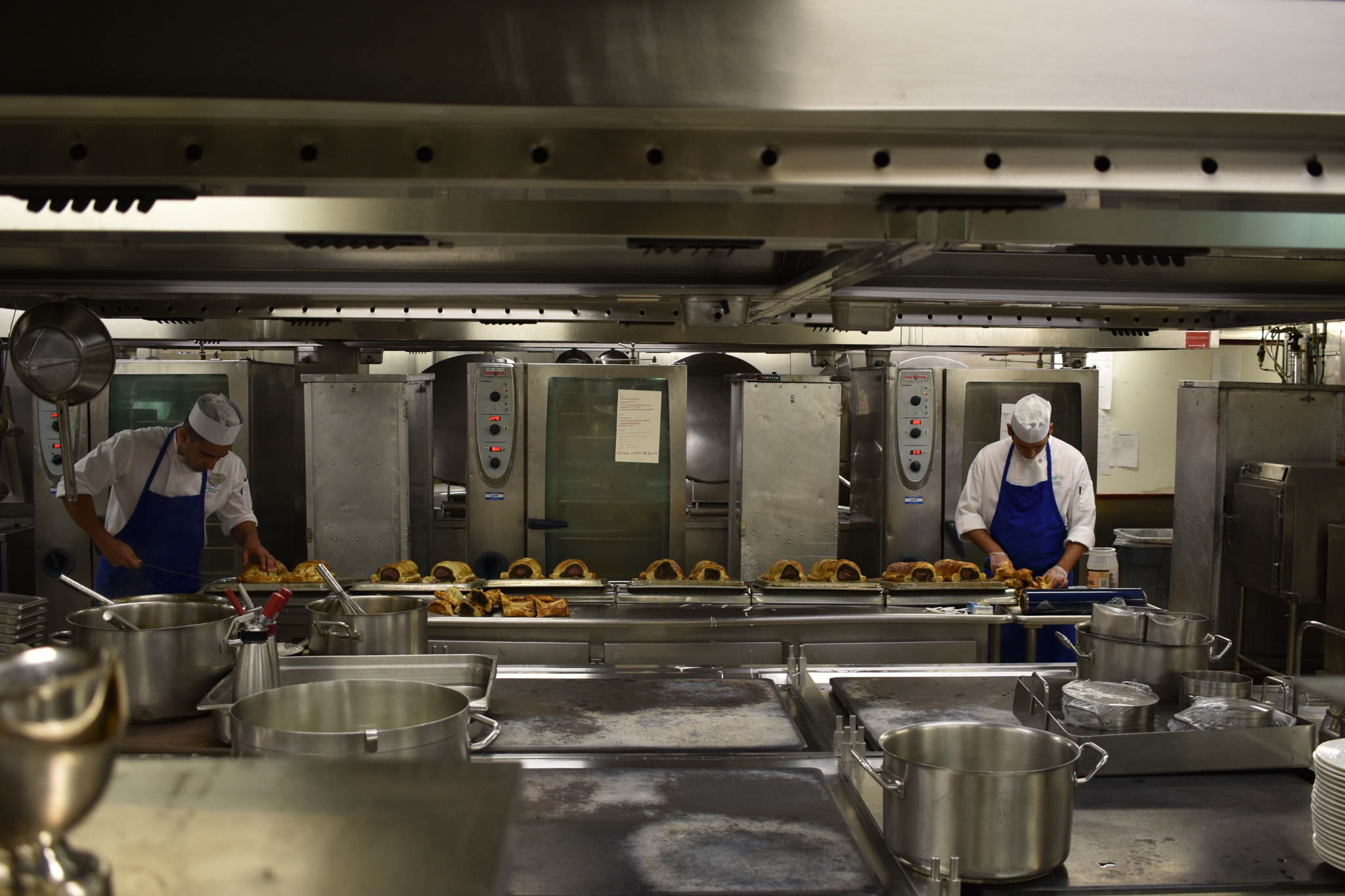
The person calling most of these words is usually the expediter at the pass. Merriam-Webster defines an expediter generally as “one that expedites”; in restaurants the title belongs to whoever controls the flow of plates. Our walkthrough of expediting at the pass follows one ticket from printer to table.
Where 86 came from
Nobody is sure. Merriam-Webster’s entry for 86 lists meanings that include refusing to serve a customer, ejecting or banning a customer and removing an item from a menu. It dates the first known use to 1942 and gives the origin as probably rhyming slang for “nix”, meaning to reject. Plenty of colorful stories circulate, but the dictionary notes that many theories are unsubstantiated, so treat any confident origin story with suspicion.
In practice, kitchens use the word as both a noun and a verb: “86 the halibut” or “we are 86 halibut”. Servers need to hear it as quickly as cooks, so they stop selling a dish the kitchen can no longer make.
Planning words: before and after the rush
Not all kitchen language is shouted. Some of the most important terms describe how a cook prepares.
- Mise en place. Merriam-Webster describes it as a culinary process in which ingredients are prepared and organized before cooking, borrowed from French for “setting in place”. Our guide to how professional kitchens get ready with mise en place covers the routine in detail.
- Station. The section of the line a cook is responsible for, such as grill, sauté or cold appetizers.
- The pass. The counter where finished plates are checked and handed to servers.
- House terms. Most kitchens develop their own nicknames for tasks, tools and dishes. Ask what a word means the first time you hear it, rather than guessing.
Frequently asked questions
Why do kitchens use so much slang?
Speed and noise. Short, standard words cut through extractor fans and clattering pans, and they mean the same thing to every cook on the line. That consistency prevents mistakes and accidents.
Is it rude for a diner to use kitchen lingo?
Not rude, but rarely useful. Staff will understand you perfectly well in plain language. The words are tools for coordinating a team, and they are most valuable when you work in a restaurant.
Do all restaurants use the same terms?
The core calls such as 86, fire, all day and behind are widely understood, but many kitchens add their own house words or local variations. The safest approach in a new job is to listen for a shift before you start using them.
Start with five words
If you are heading into your first shift, learn five words before you walk in: corner, behind, fire, all day and 86. Say the safety calls every time and confirm every instruction out loud. For more on life in and around restaurants, browse our Lifestyle articles.