To put out a grease fire in a pan, turn off the burner and slide a metal lid or baking sheet over the pan, then leave it covered until it has cooled completely. Never throw water on burning oil, and never try to carry the pan outside or to the sink. If the flames are spreading beyond the pan, get everyone out, close the door behind you and call 911 from outside.
Key facts
- Cooking is by far the leading cause of US home fires and home fire injuries, according to the US Fire Administration.
- US fire departments responded to an estimated 170,000 home cooking fires in 2021, with about 135 deaths and 3,000 injuries.
- Unattended equipment was the leading factor in cooking fires that spread beyond the pan (37%).
- Thanksgiving is the peak day of the year for home cooking fires, according to the NFPA.
- The safe sequence is short: heat off, lid on, leave it alone, and get out if it spreads.
What should you do the moment a pan catches fire?
A grease fire needs three things: heat, fuel (the oil or fat) and oxygen. Everything you do in the first few seconds is about taking one of those away without spreading the fuel.
- Turn off the heat. Switch off the burner, or the gas at the knob. Do not reach across the flames to do it; if you cannot reach the control safely, skip to getting out.
- Cover the pan. Slide a metal lid or a baking sheet over it from the side, keeping your arm out of the flames. The US Fire Administration’s cooking fire safety page advises keeping a lid or baking sheet next to the stove for exactly this reason: covering a pan that catches fire puts the fire out.
- Leave it covered. Do not lift the lid to check. Hot oil can reignite as soon as air gets back in, so wait until the pan has cooled.
- Do not move the pan. Carrying a burning pan to the sink or out the door is how people get burned and how fires spread to curtains and cabinets.
- Get out if it grows. If flames reach the cabinets, the hood or anything beyond the pan, leave, close the door, and call 911 once you are outside.
Why should you never put water on a grease fire?
Water is heavier than oil and boils at a much lower temperature than the burning fat. When it hits the pan it sinks, turns to steam almost instantly and throws burning oil up and out. A fire that was the size of a skillet can become a fireball that reaches the ceiling. The same goes for a wet towel flapped at the pan.
Other kitchen powders are risky too. Flour and sugar can burn, and a cloud of fine flour can flare. Many fire departments say baking soda or salt can smother a very small grease fire, but you need a lot of it and you have to get close. A lid is faster and keeps your hands further away.
Can you use a fire extinguisher on a grease fire?
Yes, if the extinguisher is rated for it and you know how to use it. Home multipurpose extinguishers are usually marked for Class A, B and C fires; Class B covers flammable liquids such as cooking oil. Use one only when the fire is small, the room is not filling with smoke, and you have a clear way out behind you. Stand back, aim at the base of the flames and sweep side to side.
Be aware that a powerful extinguisher blast aimed straight into a pan can push burning oil over the edge. That is one more reason to try the lid first if you can reach it safely. If you are not sure the extinguisher will work, or the fire is between you and the door, leave.
What about oven and microwave fires?
For a fire inside the oven, turn off the heat and keep the door closed so the fire runs out of oxygen. For a microwave fire, keep the door shut and unplug the microwave if you can reach the plug safely. In both cases, do not open the door again until the fire is out, and have the appliance checked before you use it again.
How do grease fires start in the first place?
Most start the same way: oil is left heating and nobody is watching it. The USFA notes that unattended equipment was the leading factor in home cooking fires that spread beyond the pan. Oil gives warnings before it ignites: it shimmers, then smokes. If you see smoke or the grease starts to boil, turn the burner off.
- Stay in the kitchen while you fry, sear or broil, and turn the burner off if you have to leave.
- Heat oil gradually and keep a lid that fits the pan within reach before you start.
- Pat food dry and lower it in gently; wet or frozen food makes oil spit and boil over.
- Turn pot handles toward the back of the stove and keep towels, oven mitts and paper away from the burners.
- Do not fill a pan more than about a third full of oil for shallow or deep frying.
Holiday cooking raises the stakes. The NFPA’s Thanksgiving safety guidance describes the holiday as the peak day of the year for home cooking fires: more dishes, more burners on at once, more people in the kitchen and more distraction. Turkey fryers deserve particular care, because they hold gallons of oil and are easy to overfill.
How do restaurant kitchens deal with grease fires?
Commercial kitchens fry far more oil than a home cook, so they plan for fire rather than relying on a lid. Hoods over fryers and griddles usually include a built-in suppression system with nozzles aimed at each appliance; when it triggers, it sprays a wet chemical agent and shuts off the fuel to the cooking line. Kitchens also keep a Class K extinguisher, which uses a similar wet chemical designed for cooking oils and fats, near the fryers. Staff learn where the manual pull station and the gas shutoff are as part of their first days on the line, much like the other habits in our guide to how restaurant kitchen stations are organized.
The everyday habits are the same ones that help at home: keep the area around the fryer clear, never leave hot oil unattended, and clean grease from hoods and filters so it cannot feed a fire. If you are curious how pros keep a station safe and orderly during service, our checklist of pro habits for cooking like a chef at home covers the basics.
Frequently asked questions
Does baking soda put out a grease fire?
It can smother a very small one, but it takes a large amount and you have to be close to the flames. A metal lid or baking sheet is quicker and safer. Never use flour or sugar, which can burn.
Can I carry a burning pan outside?
No. Moving the pan sloshes burning oil onto you, the floor and anything you pass. Turn off the heat, cover the pan and leave it where it is.
How long should the lid stay on?
Until the pan and oil have cooled completely. Lifting the lid early lets oxygen back in, and oil that is still very hot can reignite.
When should I call 911?
Call as soon as the fire spreads beyond the pan, the room fills with smoke, or you cannot put it out quickly. Get everyone out first, close the door behind you, and call from outside. Call the fire department even if you think the fire is out but you see damage to the hood or cabinets.
What kind of extinguisher should I keep in the kitchen?
For a home kitchen, a multipurpose extinguisher rated for Class B fires covers cooking oil. Restaurants keep Class K extinguishers near fryers. Mount it near an exit rather than right beside the stove, so you can reach it without going past the fire.
The short version
Heat off, lid on, hands off, and get out if it spreads. Keep a lid beside the stove whenever you fry, and never leave hot oil alone. For more on what really happens behind the kitchen door, read our restaurant kitchen myths or browse more In the Kitchen guides.
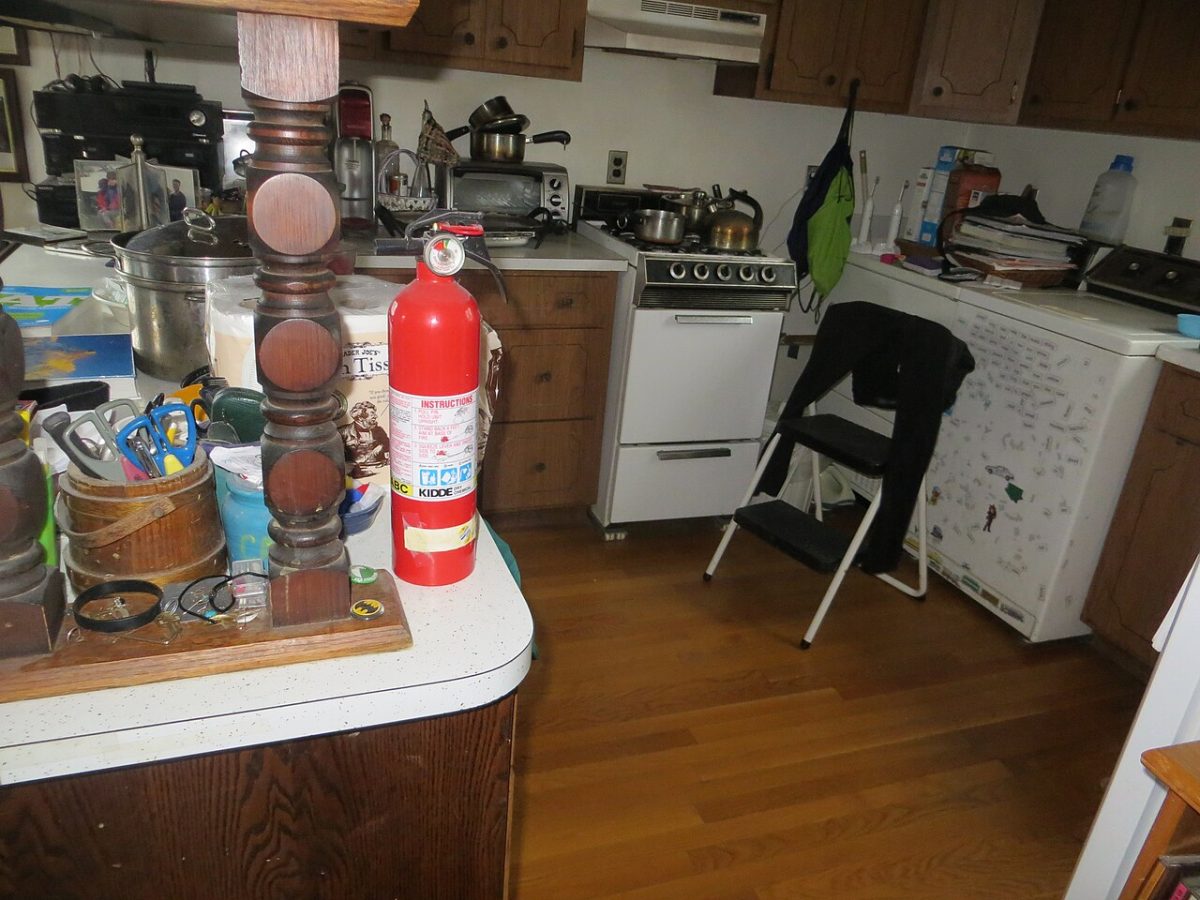
Featured photo: Kitchen Fire Extinguisher by CraigKelley62, CC BY-SA 4.0.