The classic knife cuts are a shared language of shapes and sizes that lets every cook in a kitchen produce the same result. The core set is the stick cuts (julienne, batonnet and the thicker French fry), the dice (brunoise, small, medium and large), and a few specialty cuts such as paysanne, chiffonade and tourné. Uniform pieces cook evenly and look deliberate on the plate. Use the checklist below to learn each one, starting with safe setup, then sticks, then dice.
Key takeaways
- Most dice start as a stick cut: julienne becomes brunoise, batonnet becomes small dice.
- Standard dice run from about 1/8 inch for brunoise to 3/4 inch for large dice.
- Uniform size matters more than speed; even pieces cook at the same rate.
- A sharp knife, a stable board and fingers out of the cutting line come first.
Before you make any knife cuts
Precision depends on setup. Restaurant cooks prepare their boards and tools during mise en place, long before the first order comes in, and the safety habits are the same at home or on the line. The US Occupational Safety and Health Administration’s food preparation safety guide lists the basics.
- Your knife is sharp; OSHA notes that dull knives tend to slip and may cause injuries.
- You are using the right knife for the job, usually a chef’s knife for these cuts.
- Your cutting board is stable and will not slide on the counter.
- Your guiding hand keeps fingers and thumb tucked, out of the cutting line.
- You will let a falling knife fall rather than try to catch it.
- You have a bowl or tray for finished pieces and another for trim.
- You have squared off the vegetable, trimming rounded sides so it sits flat.
Squaring off creates trim, so plan a use for it, such as a stock or soup, before you start.
The stick cuts
Sticks are the foundation of almost every other cut. The dimensions below follow the basic vegetable cuts chart in a Purdue University Extension knife skills handout and the knife skills handout from Utah State University Extension. The two differ slightly on lengths, and individual kitchens vary them too.
- Fine julienne. About 1/16 by 1/16 inch, and 1 to 2 inches long, per the Purdue chart.
- Julienne (allumette). About 1/8 by 1/8 inch, and 1 to 2 inches long in the Purdue chart or 2 1/2 inches in the Utah State handout. The Purdue chart notes that allumette normally refers only to potatoes. Used for garnishes, stir-fries and slaws.
- Batonnet. About 1/4 by 1/4 inch, and 2 to 2 1/2 inches long (Purdue) or 2 1/2 to 3 inches (Utah State). A common size for vegetable sides and crudités.
- French fry. About 1/2 by 1/2 inch and 3 inches long, per the Utah State handout. The shape for thick-cut fried potatoes.
To cut sticks, slice the squared vegetable into planks of the target thickness, stack two or three planks, then slice them into sticks of the same width.
The dice
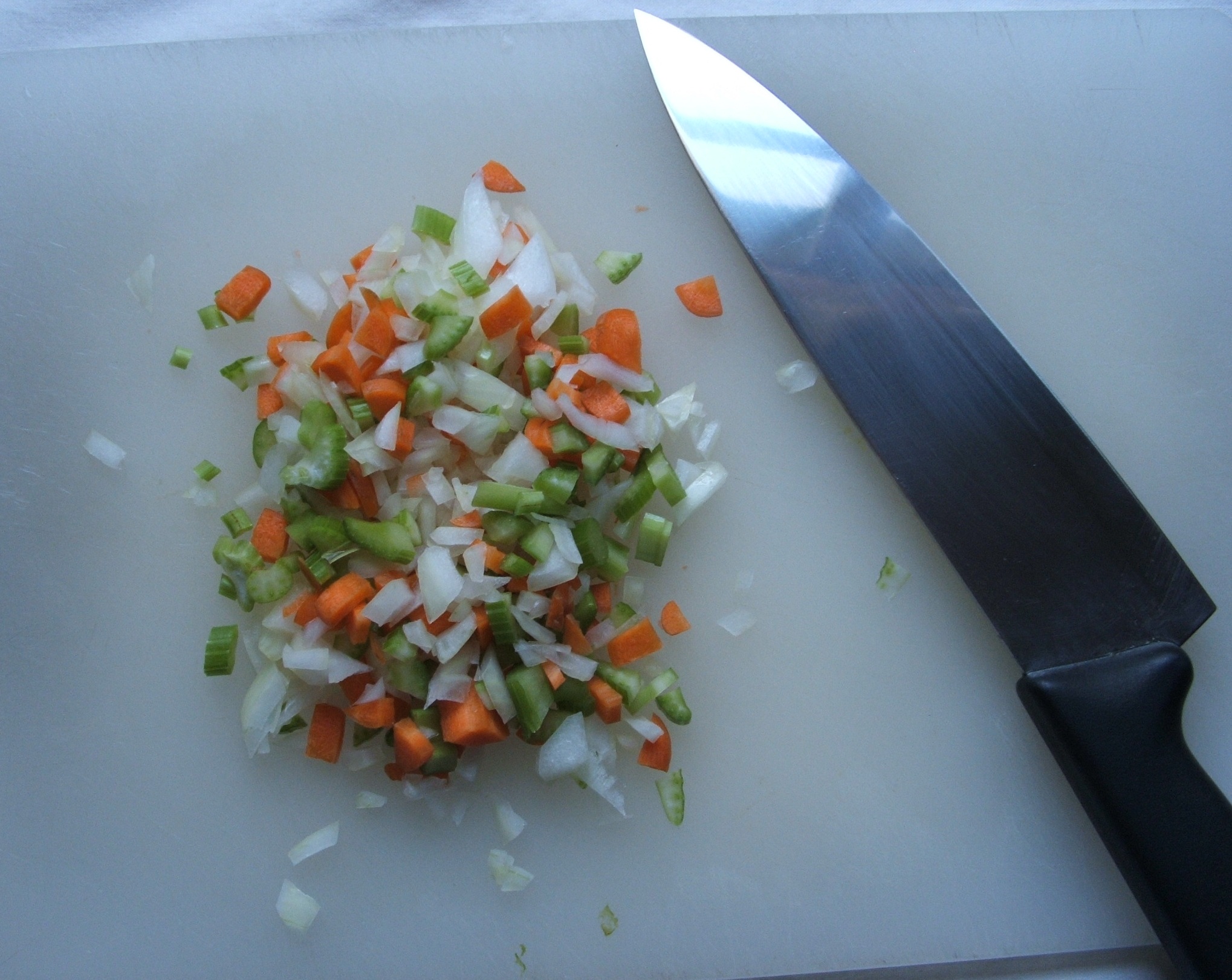
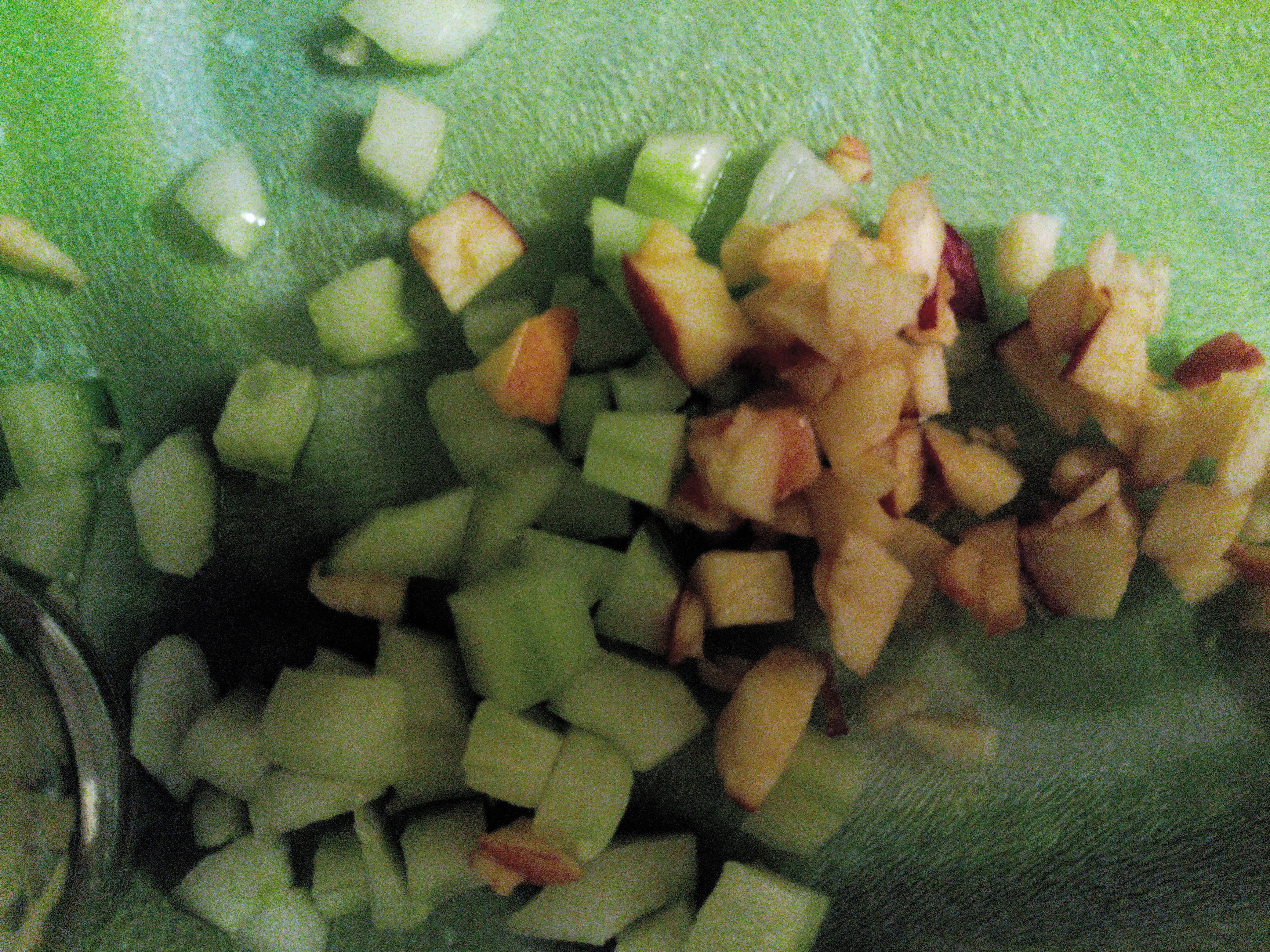
Each dice size is made by cutting a stick of matching thickness across into cubes. If your sticks are even, your dice will be too.
| Cut | Approximate size | Starts from |
|---|---|---|
| Brunoise | 1/8 inch cubes (about 3 mm) | Julienne |
| Small dice | 1/4 inch cubes (about 6 mm) | Batonnet |
| Medium dice | 1/3 to 1/2 inch cubes (about 8 to 13 mm); the two handouts differ | French fry sticks or slightly thinner |
| Large dice | 3/4 inch cubes (about 19 mm) | 3/4 inch sticks |
| Paysanne | 1/2 by 1/2 by 1/8 inch flat squares | Thin planks |
- Line up several sticks side by side and cut across them at the same width as their thickness.
- Check a few pieces against each other; adjust your knife position if they drift larger.
- Keep each size in its own container so cooks on other stations know what they are getting.
That last point matters in a professional line, where one prep cook may supply several of the kitchen stations at once.
Specialty cuts
These cuts appear less often but show up constantly in classic recipes and garnishes.
- Chiffonade. Leaves such as lettuce or herbs cut into fine strips; stack the leaves, roll them tightly and slice across the roll.
- Tourné. A barrel shape with seven sides, each about 2 inches long in the Purdue chart. It takes practice and creates a lot of trim, so it appears mostly in formal cooking.
- Mince. Chopped into very fine pieces, as with minced garlic, with no fixed size.
Practice chiffonade with large leaves first, since the rolling step is easier to control.
Checking your knife cuts
Consistency is the real test. Before calling a batch finished, run through these checks.
- Pieces are the same size within the batch, with no long tails or wedges mixed in.
- Edges are clean and square rather than crushed, which shows the knife is sharp.
- The cut matches the cooking method: smaller for quick sautés and sauces, larger for roasting and long braises.
- Trim is saved where the kitchen uses it, and the board is clear before the next ingredient.
- Your knife is wiped, cleaned and stored, never left in a sink of soapy water.
If you are practicing at home, the habits in our checklist on how to cook like a chef at home pair well with this one.
Frequently asked questions
What is the difference between julienne and batonnet?
Thickness. A julienne is about 1/8 inch square in cross-section, while a batonnet is about 1/4 inch square and a little longer. Julienne becomes brunoise when cut across; batonnet becomes small dice.
Why do restaurants care so much about uniform knife cuts?
Even pieces cook at the same rate, so nothing ends up raw or overcooked in the same pan. Standard sizes also mean any cook on the team can produce the same dish, and the plate looks the same every time it goes out.
How long does it take to learn the classic cuts?
It varies with practice time. Most people can produce recognizable sticks and dice quickly; making them consistently and at speed takes many repetitions. Focus on accuracy first and let speed come later.
Practice one cut a week
Pick one cut, such as small dice on onions or julienne on carrots, and use it in every meal for a week. Measure a few pieces with a ruler at first, then by eye. Once it is consistent, move to the next. More explainers on how professional kitchens work are in our In the Kitchen section.